Parenting Around the World $12.99
✦ 50 Countries · One Question

How does the
rest of the world
raise its children?

Japan lets six-year-olds commute alone. Denmark prioritizes play over academics until age seven. France won't cook separate meals. Fifty countries. Fifty answers to the questions every parent faces.

Get The Guide — $12.99
📖 225 pages ⚡ Instant download ✦ 50 countries
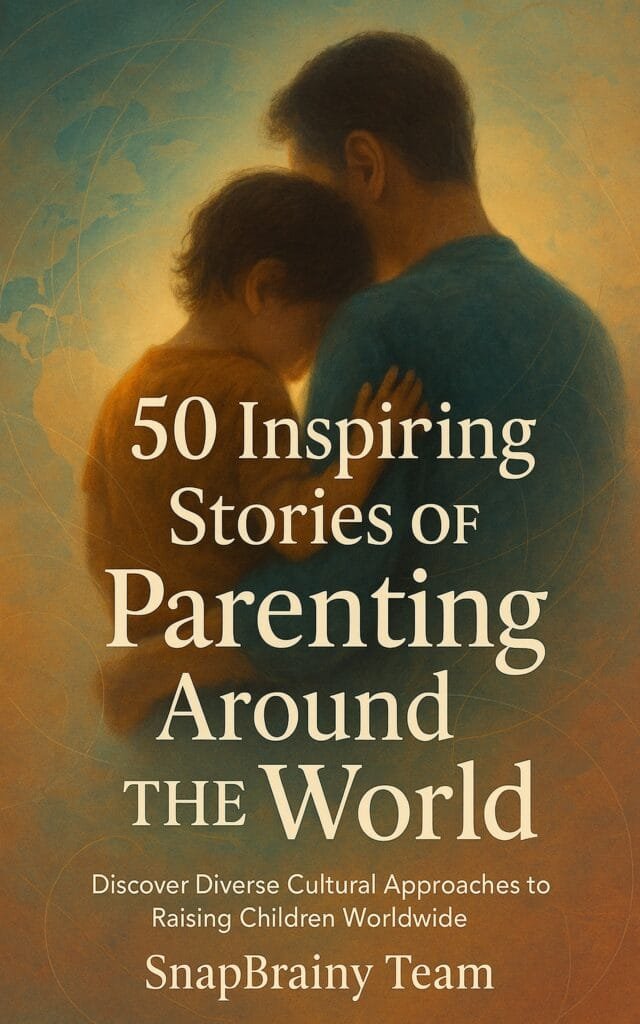
Parenting Around the World book cover

Sample chapters

Six countries. Six very different answers.

Every culture has solved the same problems. Here is what they found.

Japan · Tokyo

The Art of Letting Go Early

Japanese children commute alone on public transit from age six or seven. They carry school bags and run errands. The cultural assumption is that children are competent and that independence is built, not waited for. The chapter examines what this produces in adolescent confidence and risk tolerance.

Denmark · Copenhagen

The Hygge Childhood

Danish children have some of the longest unstructured outdoor play time in the world. Schools prioritize social-emotional learning alongside academics. Research consistently shows Danish children report among the highest wellbeing scores globally. The chapter examines what parents are and are not doing differently.

Kenya · Rural communities

The Village Childhood

In many Kenyan rural communities, children are raised by extended networks rather than nuclear families. Aunts, cousins, and neighbors share the load in ways Western parents rarely experience. The chapter examines what this does to children's relationship with adults, community, and belonging.

Finland · Helsinki

The School That Starts Late

Finnish children do not start formal school until age seven. Before that, play is the curriculum. The country consistently produces some of the highest academic outcomes in the world. The chapter examines what the research says about early academics versus late-starting, play-first approaches.

France · Paris

The Sit-at-the-Table Rule

French parents do not typically prepare separate children's meals. Children eat what adults eat, at the table, without distraction. The chapter examines the research on how food culture is transmitted, what French parents do when children refuse, and what the long-term outcomes look like.

Brazil · Favela communities

Joy as a Practice

Researchers studying parenting in lower-income Brazilian communities found consistent high rates of joyful child-adult interaction. The chapter examines what this looks like in practice, what it produces in children, and what it challenges in middle-class assumptions about what children need.

All 50 countries

The full table of contents.

From Iceland to Nigeria. From Japan to Brazil. Fifty parenting cultures — and what each one teaches.

01 The Japanese Independent Child
02 Danish Hygge Parenting
03 Finnish Play-First Schools
04 French Mealtime Discipline
05 Kenyan Village Childhoods
06 Brazilian Joy as Practice
07 Dutch Directness with Children
08 Spanish Late-Night Family Life
09 Norwegian Outdoor Childhood
10 Israeli Parenting as Debate
11 Chinese Tiger Parenting Revisited
12 Indian Joint-Family Childhood
13 Korean Education Pressure and What It Costs
14 Mexican Family Loyalty and Identity
15 Swedish Lagom and Children
16 German Independence Training
17 New Zealand Maori Child-Rearing
18 Ugandan Respect Structures
19 Argentinian Child-Centered Evenings
20 Ghanaian Proverbs as Parenting
21 British Emotional Restraint
22 American Praise Culture
23 Australian Outdoor Risk and Play
24 Canadian Multicultural Identity
25 Portuguese Slow Childhood
26 Greek Extended Family Immersion
27 Turkish Gender and Expectation
28 Ethiopian Respect for Elders
29 Pakistani Multigenerational Homes
30 Thai Buddhism and Child Patience
31 Peruvian Storytelling Tradition
32 Moroccan Communal Celebration
33 Irish Wit and Child Resilience
34 Russian Academic Rigour in Early Life
35 South Korean Screen-Time Norms
36 Polish Respect and Chores
37 Singaporean Pressure and Precision
38 Vietnamese Sacrifice and Study
39 Colombian Warmth and Physical Affection
40 South African Ubuntu in Childhood
41 Egyptian Hospitality as Child Education
42 Indonesian Community Belonging
43 Romanian Stoicism and Emotional Expression
44 Hungarian Creative Traditions
45 Czech Forest Schools
46 Nigerian Ambition and Family Obligation
47 Cuban Art and Play Integration
48 Scottish Outdoor Resilience
49 Bolivian Intergenerational Work
50 Icelandic Equality in Parenting

Questions

Quick answers.

No. It does not tell you how to parent. It shows you fifty different answers to the same questions that parents everywhere face — and what each answer produces. What you take from it is yours to decide.

It was built with this in mind. The fifty stories span Africa, Asia, South America, the Middle East, and the Pacific alongside Europe and North America. The selection was made to cover genuine diversity of approach, not just geography.

Both. Each chapter combines direct reporting — what parents in a given context actually do and say — with whatever research exists on the outcomes. Where research is thin, the chapter says so.

PDF. Works on any device. Download once, yours forever.

5 to 6 pages. Each tells the story, identifies the cultural logic, and connects it to what research shows about outcomes.

Instant Digital Download

Parenting Around the World

Fifty countries. Fifty approaches to raising children. What each one does, why it makes sense within its culture, and what it produces.

$12.99

One-time purchase. Yours forever.

225 pages 50 full chapters PDF — any device Delivered instantly
Get The Guide — $12.99

Secure checkout · Instant email delivery · snapbrainy.com