Fifty women who reshaped food culture — the cooks, writers, scientists, and activists whose work changed what we eat, how we cook, and how we think about food.
Get The Guide — $12.99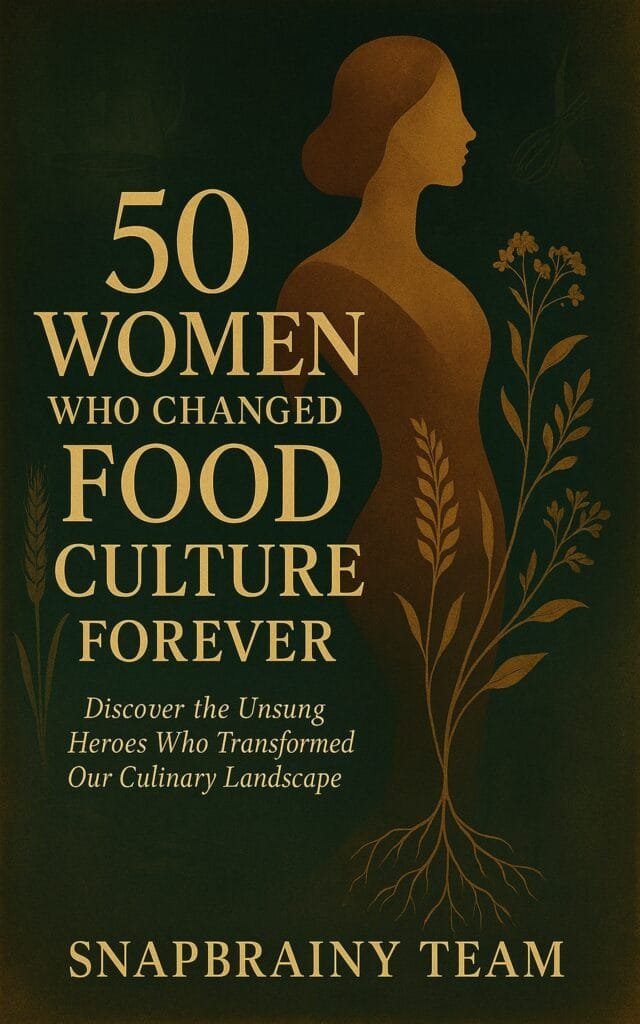
Sample chapters
What each one did, what made it possible, and what it changed after them.
Julia Child did not become a professional cook until she was 36. Her first cookbook, Mastering the Art of French Cooking, was rejected by the first publisher. Her television show, The French Chef, premiered in 1963 and ran for ten years. She made French cooking comprehensible to American home cooks at a time when the American food conversation was shaped entirely by convenience food and corporate marketing. The PBS model she proved persists in food television today.
In 1933, Eugénie Brazier became the first person — male or female — to hold six Michelin stars simultaneously across two restaurants. She was a chef at a time when women were almost entirely excluded from serious professional kitchens in France. Her student Paul Bocuse, often described as the father of modern French cuisine, acknowledged her as his most important teacher. He visited her grave every year until his death.
In 1971, Alice Waters opened Chez Panisse in Berkeley, California. Her insistence on seasonal, local ingredients sourced from named farms preceded the farm-to-table movement by two decades. The California cuisine she developed — light, produce-centered, built around relationships with producers — changed the direction of American restaurant cooking and produced the template that defines the global upscale dining market today.
Edna Lewis was born in a farming community in Virginia founded by freed slaves. Her 1976 cookbook, The Taste of Country Cooking, documented a food tradition that was disappearing: the Southern African American farming and kitchen culture she had grown up in. She described what she cooked, where the ingredients came from, and how the seasons shaped the table. The book is now considered one of the most important American cookbooks of the twentieth century.
A British-born writer who moved to Mexico in 1957, Diana Kennedy spent sixty years documenting Mexican regional cuisine before it was documented by anyone else. Her 1972 cookbook, The Cuisines of Mexico, established that Mexican food was not tacos and enchiladas but a complex, regionally diverse culinary tradition as sophisticated as French cuisine. She was made a Member of the British Empire and awarded the Order of the Aztec Eagle — Mexico's highest honor for foreigners.
Marcella Hazan arrived in New York in 1955 speaking no English and with no intention of becoming a cooking teacher. Her 1973 book, The Classic Italian Cook Book, changed how Americans understood Italian food. She insisted on precision: a specific technique, a specific time, a specific temperature. Her books displaced the idea of Italian American cooking as a single cuisine and introduced regional Italian tradition to the English-speaking world.
All 50 profiles
From Julia Child to Samin Nosrat. Fifty women whose work changed how the world cooks and eats.
Each chapter: background, contribution, context, and lasting impact on food culture.
Questions
The criterion was measurable impact on food culture — how people cook, what ingredients are available, how restaurants are organized, how food is written about. The selection spans professional chefs, food writers, recipe developers, and food activists. The focus is on documented impact, not fame.
No. The selection includes figures from Mexico, India, Japan, Italy, the Middle East, and Africa alongside American and European subjects. The criterion was global impact on food culture, not origin.
Yes. Approximately half the profiles are of women who are still living and working. Current figures are covered in terms of their documented impact to date, not speculative future influence.
PDF. Compatible with every device without expiry. Download once, yours permanently.
Four to six pages per figure. Each covers the person's background, their specific contribution, the context in which they worked, and their lasting impact on food culture.
Fifty women whose work transformed what the world eats — the cooks, writers, scientists, and activists who reshaped food culture from the inside.
One-time purchase. Yours forever.
Secure checkout · Instant email delivery · snapbrainy.com

