The Bhagavad Gita. The Psalms. The Tao Te Ching. The Meditations. Fifty of the world's most important sacred texts — what they actually say, what they teach, and why they have lasted.
Get The Guide — $12.99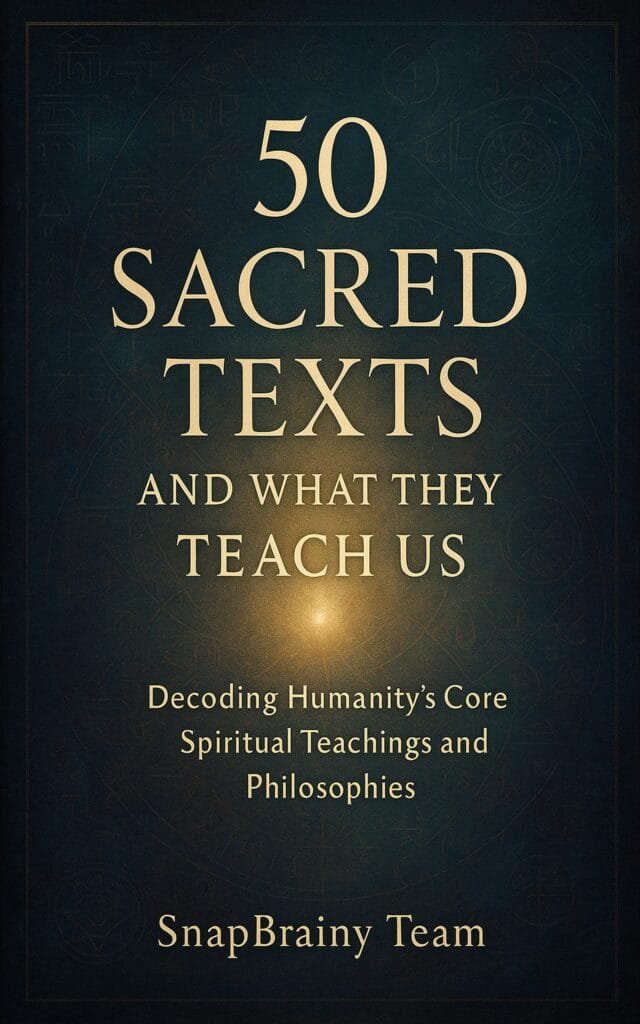
Sample chapters
What these texts actually say — not what culture has decided they say.
The Dhammapada is 423 verses distilled from the Buddha's oral teachings. No creation myth. No deity. Just a map of the mind — and the precise conditions that cause suffering or end it. It is the most read Buddhist scripture in the world for a reason.
Krishna speaks on a battlefield. The teaching: do what is yours to do, without attachment to the result. This idea — that right action and non-attachment are inseparable — has been called the central insight of Indian philosophy.
Mark was written first, before Matthew and Luke, probably within living memory of Jesus. It is the most urgent of the four — no birth narrative, no infancy stories. Just Jesus, acting. Scholars study it to get closest to the historical record.
Seven verses. Recited seventeen times a day by a practicing Muslim. Al-Fatiha is Islam's most repeated text — a distillation of the entire Quran's relationship between the human and the divine into a handful of lines.
A righteous man loses everything. He demands answers from God. God answers from the whirlwind — not with explanation, but with vastness. Job is the oldest sustained engagement with the problem of innocent suffering in any tradition. It does not resolve. It reframes.
Marcus Aurelius wrote the Meditations for himself — never intended for publication. He was Rome's most powerful man reminding himself, daily, that power is illusion and virtue is the only thing under your control. The most unexpectedly honest document in Western philosophy.
All 50 texts
Christianity. Islam. Judaism. Buddhism. Hinduism. Taoism. Stoicism. Zoroastrianism. The complete map of humanity's most enduring wisdom.
Every chapter: tradition, context, central teaching, and what it leaves unresolved.
Questions
No. The fifty texts span Christianity, Islam, Judaism, Buddhism, Hinduism, Taoism, Stoicism, Zoroastrianism, and more. Each text is approached on its own terms — what it claims, what it offers, what it leaves unresolved.
None. Every chapter assumes the reader is coming to the text for the first time. The goal is to get you to the actual ideas as quickly as possible.
4 to 6 pages each. Long enough to engage the text seriously. Short enough to read in a single sitting.
PDF. Works on any device. Download once, yours forever.
Analysis. Each chapter covers what the text actually says, what tradition it belongs to, what the central teaching is, and what it leaves unresolved. You leave each chapter knowing the text — not just knowing about it.
The books that shaped every civilization — what they actually say, what they teach, and why, after centuries, they still matter.
One-time purchase. Yours forever.
Secure checkout · Instant email delivery · snapbrainy.com