Fifty financial mistakes analyzed in full — what they cost over time, why people make them, and the specific corrections that prevent lasting damage.
Get The Guide — $12.99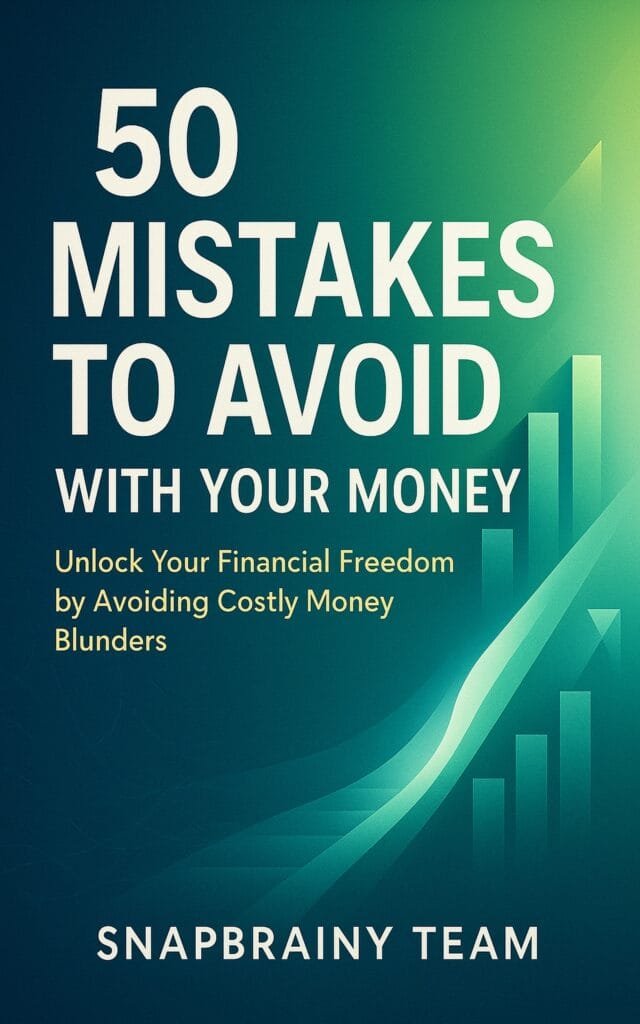
Sample chapters
Each one compounds quietly. Most people do not notice until the math is already stacked against them.
Time is the only variable in investing that cannot be bought back. The difference between starting at 25 and starting at 35 is not ten years of contributions — it is roughly two times the final portfolio value, assuming equal contributions and identical returns. The reason is compound growth: returns generate returns. Every year of delay removes a year of that compounding from the equation permanently. The chapter covers what late starters can do and what they cannot recover, and why starting at any age is better than continuing to delay.
Without an emergency fund, every unexpected expense — a medical bill, a car repair, a job loss — forces either debt or the liquidation of investments. Debt at credit card rates of 20–28% is not a neutral financial event. It often sets off a cascade: minimum payments consume cash flow, savings stall, and the next emergency also goes on the card. The mathematically correct emergency fund size is three to six months of essential expenses, liquid and separate. The chapter covers how to build it and why the sequence matters.
A 1% annual management fee on a $100,000 portfolio over 30 years costs approximately $100,000 in foregone returns — not $30,000. This is the compounding effect in reverse: fees compound over time exactly as returns do. Most investors do not know what fees they are paying. Most financial advisors do not volunteer the information. The chapter covers how to find what you are paying, what is normal, what is excessive, and where to find equivalent products at a fraction of the cost.
A $5,000 credit card balance at 24% APR paid at the minimum payment rate takes approximately 22 years to pay off and costs $8,000 in interest — nearly tripling the original balance. Most people who carry credit card balances do not know this calculation and have never run it. The chapter explains the math, covers the avalanche and snowball repayment methods, and explains the specific behavioral reasons minimum payments are the default — and how to override them.
Tax-advantaged retirement accounts — 401(k), IRA, Roth IRA in the US; ISA in the UK; RRSP in Canada — provide either a tax deduction on contributions or tax-free growth on withdrawals. Either benefit is significant. Both together, in a Roth IRA for instance, can mean hundreds of thousands of dollars in tax savings over a lifetime. A substantial fraction of people who have access to these accounts do not maximize them or do not use them at all. The chapter explains how each account type works and in what order to prioritize them.
Every salary increase contains a choice: maintain current spending and save the difference, or increase spending proportionally to income. Most people do the latter. This is not a moral failure. It is the default behavior when no explicit decision is made. Lifestyle inflation compounds quietly: the bigger apartment, the better car, the restaurant habit that wasn't there at the previous salary — each individually reasonable, each locking in a higher burn rate that the next salary increase must exceed just to maintain the previous savings rate.
All 50 mistakes
From starting too late to financial avoidance. Fifty errors — and the specific corrections for each one.
Each chapter: the mistake, what it costs over time, and exactly what to do instead.
Questions
No. The chapters cover principles that apply globally. Where account types or tax rules are country-specific — retirement accounts, tax-advantaged vehicles — the chapter names the equivalent in the US, UK, Canada, and Australia.
No. Each chapter explains the concept, the math where it matters, and the specific action to take. The goal is clarity about what to do and why, not financial literacy in the abstract.
Avoiding mistakes. The book does not cover high-risk strategies or wealth-building through speculation. It covers the standard, documented errors that reduce wealth over time — and what to do instead.
PDF. Instant download, any device, no expiry.
Three to five pages per mistake. Each covers what the mistake is, why people make it, what it costs in concrete terms, and what to do instead.
Fifty financial errors with real costs — what each one compounds to over time and the specific action that prevents it.
One-time purchase. Yours forever.
Secure checkout · Instant email delivery · snapbrainy.com