Fifty small, research-backed habits that reduce stress at the source — not by avoiding life, but by changing how your nervous system responds to it.
Get The Guide — $9.99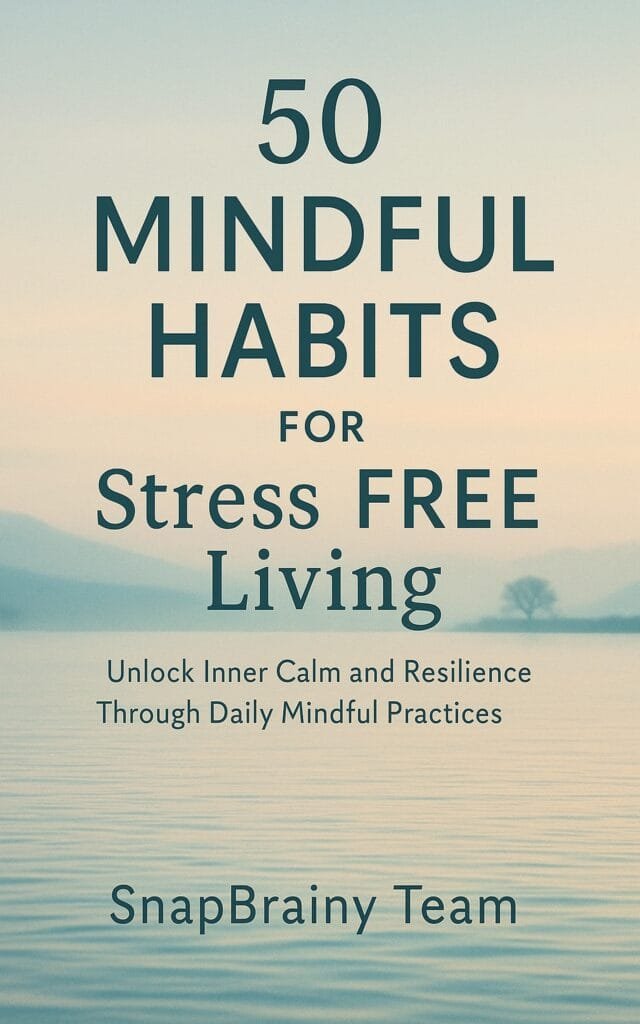
Sample chapters
Each one explains the mechanism — why it works, not just what to do.
Before picking up your phone, spend two minutes on a single fixed activity: three slow breaths, or looking out a window, or writing one sentence about what you intend to do that day. The content matters less than the consistency. The anchor tells your nervous system that the day begins with you choosing what happens, not with your phone choosing it for you. Most stress begins with a lost morning.
Pick one hour each day and remove every competing input during it: close other tabs, silence the phone, close the door. Work on one thing. Research on attention shows that switching tasks — even briefly — extends total completion time by 25% and increases errors. The hour does not have to be the same hour each day. It just has to be defended.
A double inhale through the nose followed by a long exhale through the mouth. This pattern — two inhales, one extended exhale — activates the parasympathetic nervous system faster than any other breathing technique. Stanford neuroscientist Andrew Huberman's research shows it can reduce subjective stress within 30 seconds. It works in a meeting. It works in traffic. It takes 30 seconds.
Blue light from screens suppresses melatonin production, delaying sleep onset by 1–3 hours on average. The 90-minute cutoff is not arbitrary — it gives the melatonin suppression time to resolve. Poor sleep is one of the most reliable amplifiers of stress: it increases cortisol reactivity, impairs prefrontal regulation of the amygdala, and makes every stressor feel larger. Sleep is not recovery from stress. It is stress prevention.
Choose one conversation each day — with a colleague, a family member, anyone — and give it your complete attention. No phone. No mental parallel processing. Full eye contact. Listen to understand, not to respond. Research on loneliness shows that the quality of social connection matters more than quantity. Ten minutes of genuine presence produces more psychological benefit than an hour of distracted proximity.
When you notice stress, name it: "I am feeling anxious," "I am feeling overwhelmed," "I am feeling irritated." Labeling an emotion activates the prefrontal cortex and reduces amygdala activation — a process called affect labeling. You are not suppressing the emotion. You are giving your rational brain a moment to engage before your reactive brain acts. It takes three seconds. It changes the outcome more than most habits.
All 50 habits
Morning to evening. Body, mind, attention, relationships. Fifty habits that address stress where it actually lives.
Each chapter: the habit, the research, and exactly how to start today.
Questions
No. The book is designed to be read sequentially and then used selectively. Most readers identify six to ten habits that address their specific stress patterns. Starting with two or three is more effective than attempting all fifty at once.
Yes. Each chapter cites the research behind the habit — the mechanism, the study, and where the evidence is stronger or weaker. The book does not present correlation as causation or pop psychology as neuroscience. Where the evidence is limited, it says so.
Most habits in the book take between 2 and 20 minutes per day. The principle throughout is that sustainable habits are small. A two-minute habit you maintain produces more benefit than a 30-minute habit you abandon after two weeks.
PDF. Works on every device without expiry. Download once, keep permanently.
Three to five pages per habit. Each covers the habit, the research behind it, why it works, and how to implement it starting today.
Fifty small, research-backed habits that reduce stress at the source — explained for the mechanism behind them, not just the instruction.
One-time purchase. Yours forever.
Secure checkout · Instant email delivery · snapbrainy.com