Anchoring. Loss aversion. Framing. Conformity. Fifty invisible forces that shape every decision you make — mapped precisely, so you can finally see them working.
Get The Guide — $9.99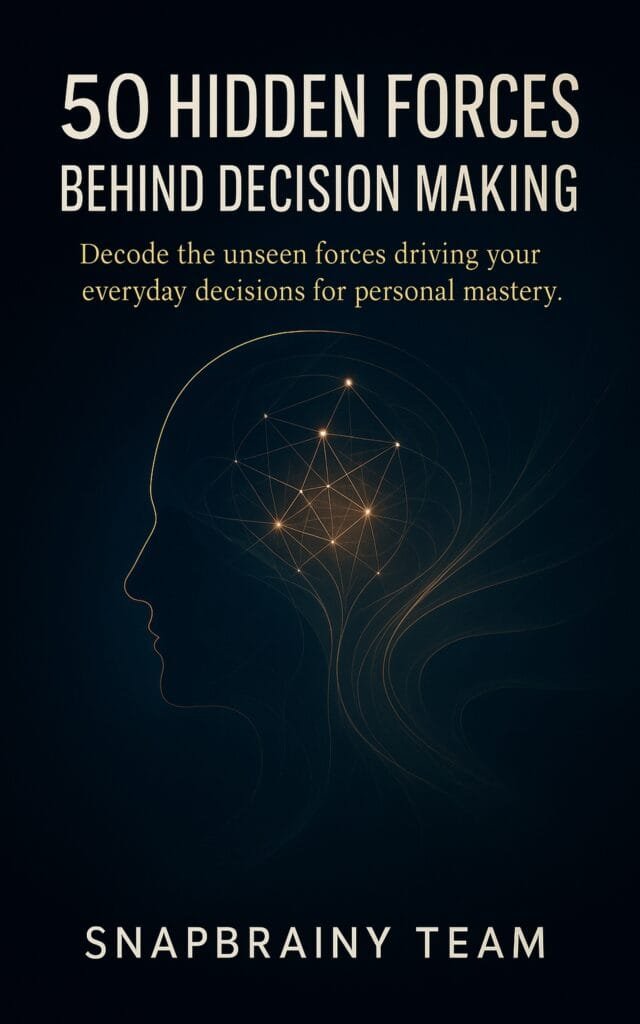
Sample chapters
You didn't notice them. That's the point.
The first number you see pulls every subsequent estimate toward it — even when the number is random. Doctors, judges, and investors are not immune. The chapter explains why anchoring is so powerful, how it works in salary negotiations, pricing, and legal sentencing, and how to reset the anchor.
You change your stated opinion to match the group even when you know the group is wrong. Asch demonstrated this in 1955. Every replication since has confirmed it. The chapter covers when conformity is adaptive, when it is dangerous, and the precise conditions that allow dissent.
You keep investing in something that is not working because of what you have already spent. The money, time, or effort is gone. It cannot influence the future return. Yet it dominates the decision. The chapter explains why this error is almost universal and how to escape it.
The same information presented differently produces opposite decisions. Surgeons recommend different operations depending on whether outcomes are framed as survival rates or mortality rates. The chapter maps how framing works in health, finance, law, and everyday choices.
Losing $100 hurts roughly twice as much as gaining $100 feels good. This asymmetry shapes every decision about risk, from insurance to investment to relationships. The chapter explains where loss aversion comes from, when it is rational, and when it actively works against you.
You do not evaluate experiences by their average. You evaluate them by their peak intensity and their ending. A painful medical procedure remembered as less painful if it ends gently. A good vacation ruined by a bad last day. The chapter covers how this shapes decisions about what to repeat.
All 50 forces
Cognitive. Social. Temporal. Perceptual. The full inventory of what is actually driving your choices.
Each chapter: mechanism, evidence, real-world examples, practical implications.
Questions
It covers some of the same territory but is structured differently. Each chapter is a standalone treatment of one specific force — what it is, how it works, when it matters most, and how to account for it. Less narrative, more map.
Both. Readers have reported applying it to hiring decisions, investment analysis, negotiation, legal work, and clinical judgment. The forces covered are active in any high-stakes decision.
None. Each chapter explains the research in plain language. The goal is a clear working understanding of each force, not an academic survey.
PDF. Works on any device. Download once, yours forever.
4 to 5 pages. Each covers the mechanism, the evidence, and the practical implications.
Fifty invisible forces that shape every choice you make — mapped precisely, with the research, the mechanisms, and what to do about them.
One-time purchase. Yours forever.
Secure checkout · Instant email delivery · snapbrainy.com

