Shame versus guilt. Dread versus fear. Loneliness versus solitude. Fifty emotions mapped with precision — what they are, how they differ from adjacent states, and what they are trying to tell you.
Get The Guide — $12.99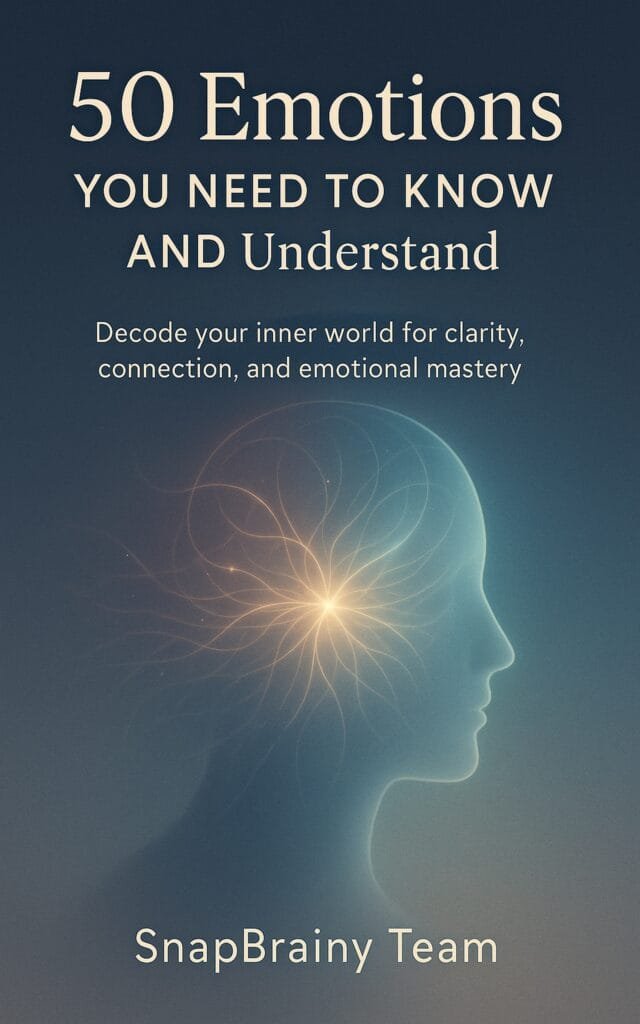
Sample chapters
Precise mapping changes everything. Knowing exactly what you are feeling is the first step to doing something useful with it.
They feel alike but operate differently. Guilt says "I did something bad." Shame says "I am bad." The distinction matters because they produce opposite responses. Guilt motivates repair. Shame motivates concealment. Understanding which one is present changes what you should do next.
The one emotion that predicts relationship breakdown better than any other — according to thirty years of research. Contempt is not anger. Anger sees the other person as capable of better. Contempt has given up. Recognizing it early is the only way to reverse it.
Not fear. Fear responds to something present and real. Dread responds to something imagined and future. The chapter maps how dread works differently in the brain, why it is often more exhausting than the event it anticipates, and three techniques for reducing its footprint.
One of the least understood positive emotions. Awe occurs when something is too large or complex for your existing mental categories. Research shows it consistently reduces self-focused thinking, increases prosocial behavior, and produces measurable changes in time perception. It is more useful than most people know.
Holding two contradictory feelings at the same time. Most people try to resolve it. The research suggests they shouldn't. Ambivalence — felt honestly — produces better decisions than false certainty. The chapter explains when to sit with it and when resolution is actually required.
Not the same as being alone. You can feel it in a room full of people, in a long relationship, in a busy city. Loneliness is a signal that something is missing from your connection to others — not that you are defective. The chapter covers what triggers it, what maintains it, and what reduces it.
All 50 emotions
From joy to contempt, from awe to cynicism. The full emotional vocabulary — built for clarity, not comfort.
Each chapter: definition, adjacent emotions, research findings, and what the emotion is actually telling you.
Questions
Neither, exactly. Each chapter is built on psychological research but written for a general reader. The goal is understanding — what each emotion is, how it works, and why it matters — not a program or a method.
No. The book covers the full range: joy, gratitude, awe, contentment, elation, hope, and more. The focus is on accuracy — understanding each emotion on its own terms, whether pleasant or painful.
Several readers have said their therapists recommended it or that they use it as a companion to therapy. It is not a therapeutic tool on its own, but it builds the emotional vocabulary that makes therapy more productive.
PDF. Works on any device. Download once, yours forever.
4 to 5 pages. Each chapter covers what the emotion is, how it differs from adjacent emotions, what research shows about it, and what it is useful for.
The complete emotional map — fifty states, precisely defined, clearly distinguished from adjacent emotions, grounded in research.
One-time purchase. Yours forever.
Secure checkout · Instant email delivery · snapbrainy.com

