Fifty ancient practices — from Vipassana to Memento Mori to the Sabbath — still practiced, still relevant, and now increasingly supported by modern science.
Get The Guide — $12.99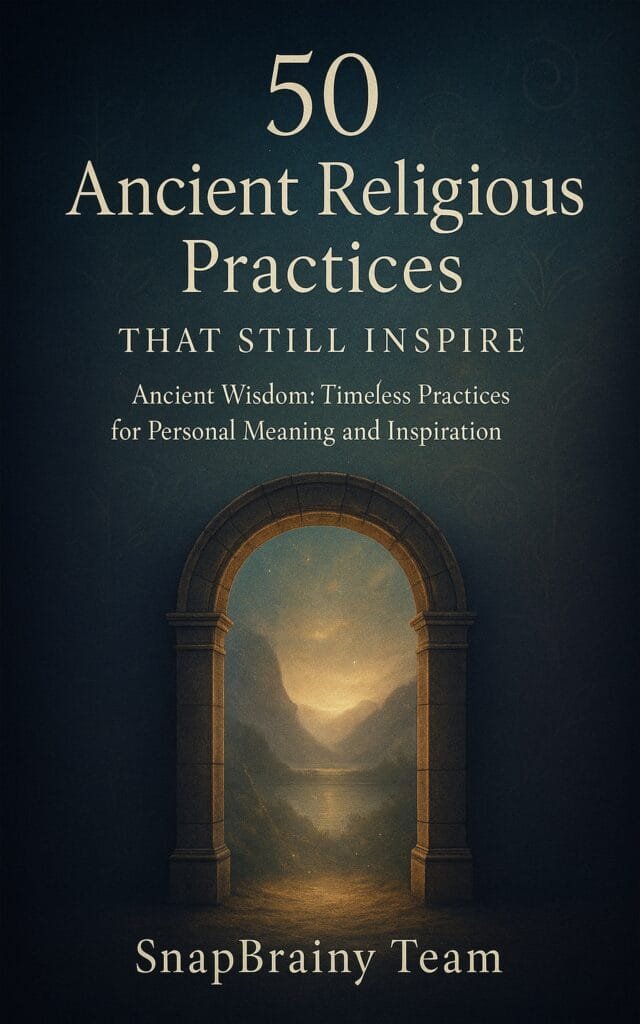
Sample chapters
From ancient India to Stoic Rome — the practices that lasted because they worked.
Observe the body and mind with total non-reactivity. The practice predates modern neuroscience by 2,500 years, but every major effect it claimed — on stress, attention, and emotional regulation — has since been documented in clinical trials.
Marcus Aurelius began each morning by considering that this might be his last day. Not as morbidity — as clarity. Every Stoic used this practice to sharpen attention and reduce the weight of trivial concerns.
One day per week of complete cessation from work and production. Ancient in origin, radical in design. The physiological case for a recurring rest cycle is now well-documented. The practice preceded the science by millennia.
The deliberate repetition of sacred phrases, synchronized with breath. Functionally identical to what neuroscience now calls "focused attention meditation." The Sufis built an entire tradition around it eight centuries before the research.
Read slowly. Pause on what strikes you. Sit with it. The monastic practice of contemplative reading is the deliberate opposite of how most people consume text today — and the results, for comprehension and reflection, are not subtle.
Deliberately controlled breathing patterns that activate different states of the nervous system. The yogic framework for this is thousands of years old. The physiological mechanism — vagus nerve stimulation, CO2 management — was only charted in the last century.
All 50 practices
Buddhism, Stoicism, Christianity, Judaism, Islam, Hinduism, Sufism — the complete map of humanity's inner life across cultures and centuries.
Respectful. Historically grounded. Each practice explained in its original context and its modern relevance.
Questions
Neither and both. Each practice is presented in its original context, with its history and intended purpose. The book draws connections to modern psychology and neuroscience where they exist, but doesn't reduce the practices to those explanations.
Buddhism, Stoicism, Christianity (monastic, Catholic, Protestant), Judaism, Islam, Hinduism, Sufism, indigenous traditions, and secular spiritual practices. The selection is global and historically broad.
No. The book is written for any reader with genuine curiosity about how humans have structured their inner lives across cultures and centuries. Many of the practices are directly applicable without any religious commitment.
PDF. Any device. Download once, keep forever. No subscription.
3–5 pages. Each chapter covers the origin, the practice as it was intended, and why it continues to resonate — practically and psychologically.
Fifty practices across five thousand years of human wisdom — still relevant, increasingly validated, and accessible to anyone.
One-time purchase. Yours forever.
Secure checkout · Instant email delivery · snapbrainy.com

